Where did it begin? A visualisation for creative practitioners
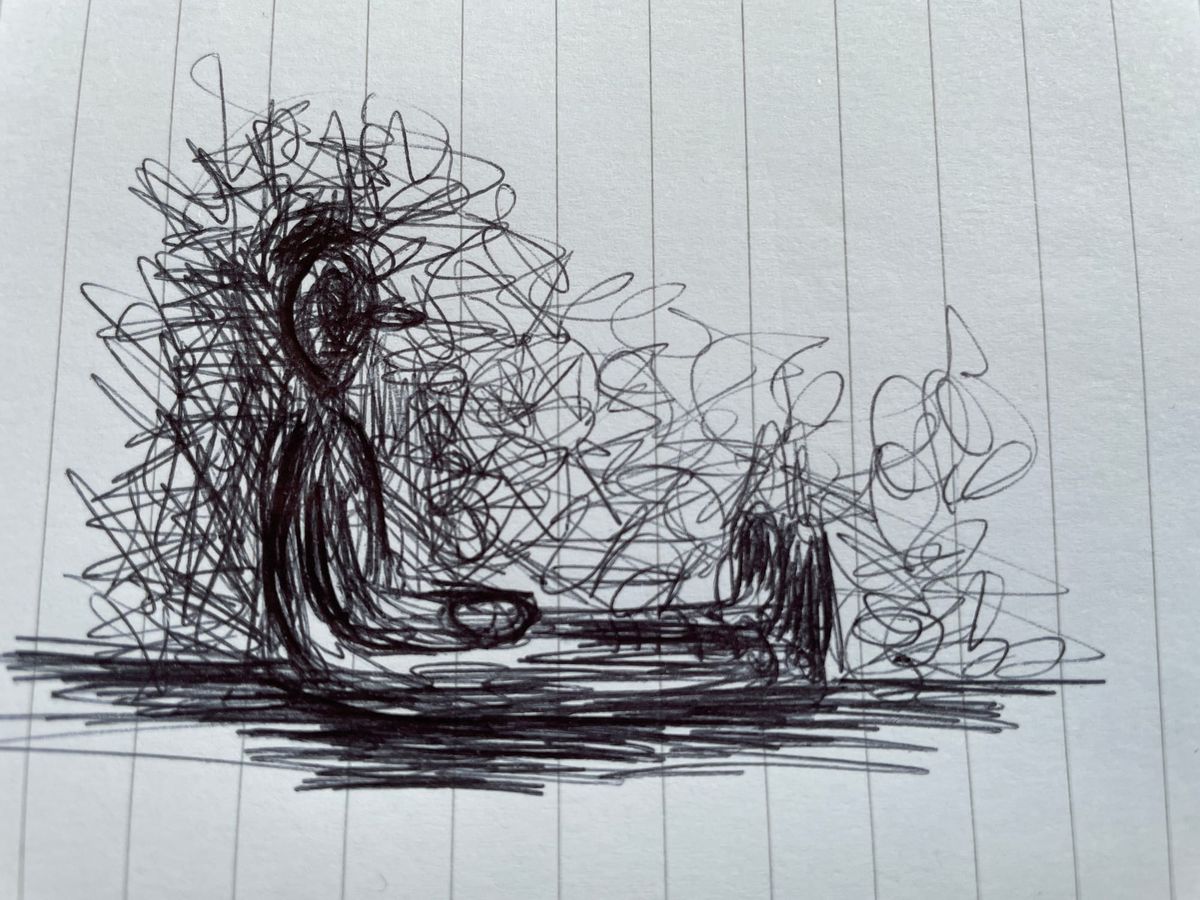
There is a question I find myself returning to when I’m working with teachers, educators, or anyone who has been holding creativity at the centre of their practice: when did you first know you were an artist? Not the formal moment, not the qualification or the job title, the felt one.
In a recent session with a group of art educators, I led a guided visualisation built around exactly this question. I asked people to let go of where they currently were, professionally and physically, and to travel back. Not to a specific memory, necessarily, but to the sense of a moment, the moment that creativity first became something consciously alive in them. The moment when making something, or seeing something made, lit a feeling that said: this matters to me.
I asked them to notice what they could sense. Not just what they saw, what they smelled; what they felt under their hands, the texture of a surface, the weight of a tool, the particular quality of light. I wanted us to get under the story and into the body, because the body holds things the narrative often forgets.
What came back into the room was extraordinary.
The smell of paint; the rough texture of sugar paper; a first drawing, small and uneven, stuck to a fridge with a magnet; a grandparent who made things with their hands; a teacher who paused long enough to look; a quiet afternoon alone with materials, before anyone had told them what making was for.
Each person arrived somewhere different. But the quality in the room was the same…a kind of recognition. A returning.
This is what somatic and embodied practice can do that cognitive recall often misses. When we locate memory in the body, through smell and touch and sensation, we are not just remembering, we are reactivating. The nervous system doesn’t easily distinguish between a felt memory and a present experience, which means that, for a few minutes, these practitioners were not just recalling the beginning of their artistic life, they were in it.
That matters because many of the people I work alongside exist in professional contexts that constantly ask them to justify creativity in terms that creativity was never designed for. Measurable outcomes, demonstrable impact….rational, cognitive, institutional language and over time, that pressure does something. It buries things, it puts distance between a practitioner and the original impulse, the thing that made this worth doing.
The visualisation doesn’t solve that but it creates a living, felt memory that can be carried forward, like a kind of anchor. Not a memory of the career, but a memory of the beginning, the moment the inner artist arrived, before the systems got to it.
I have been exploring grounding and somatic practice for some time now, and I keep arriving at the same insight…people change from the inside out (albeit in relationship with others and environments (political, social and physical), and that inside is not primarily cognitive. It is felt, it is sensory, it is often located in experiences that happened before we had language for them.
When we create space for that in our work with practitioners, something shifts. Not dramatically, not always visibly but something is returned to its rightful place.
If you work with educators, artists, or anyone carrying creative practice through an institution, I would encourage you to try something like this. A simple invitation: let’s go back to where it started, not as nostalgia, as resource.