Projects
Material Conversations
“Material Conversations” is a series of experiments that examine the agency of everyday materials. The collection positions personal experience in relation to wider structural issues of care and power. Drawing on the frameworks of new materialism, autotheory, and affect theory, the work situates these objects and images as sites of encounter, negotiation, and ethical consideration.
Assemblages
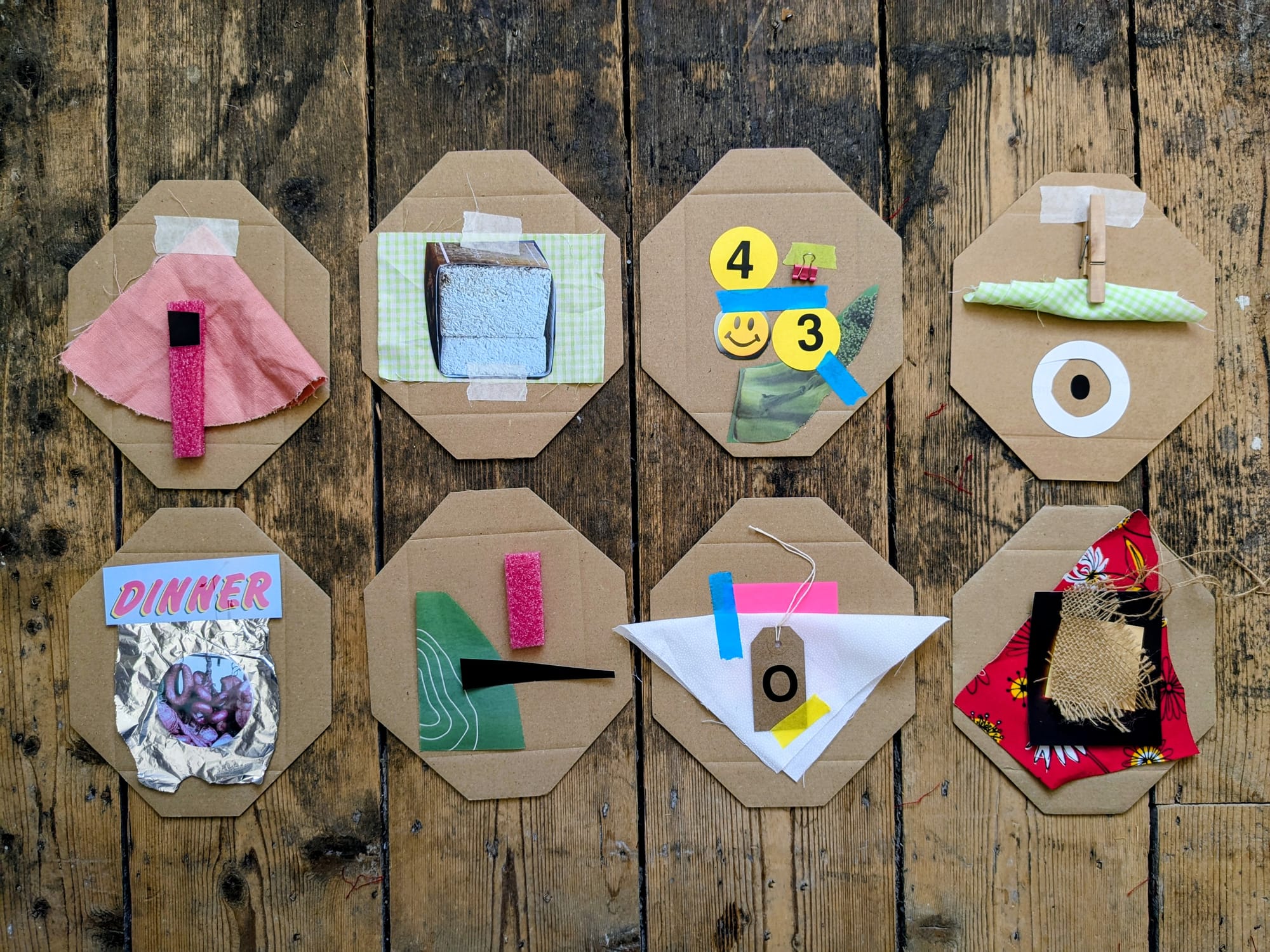
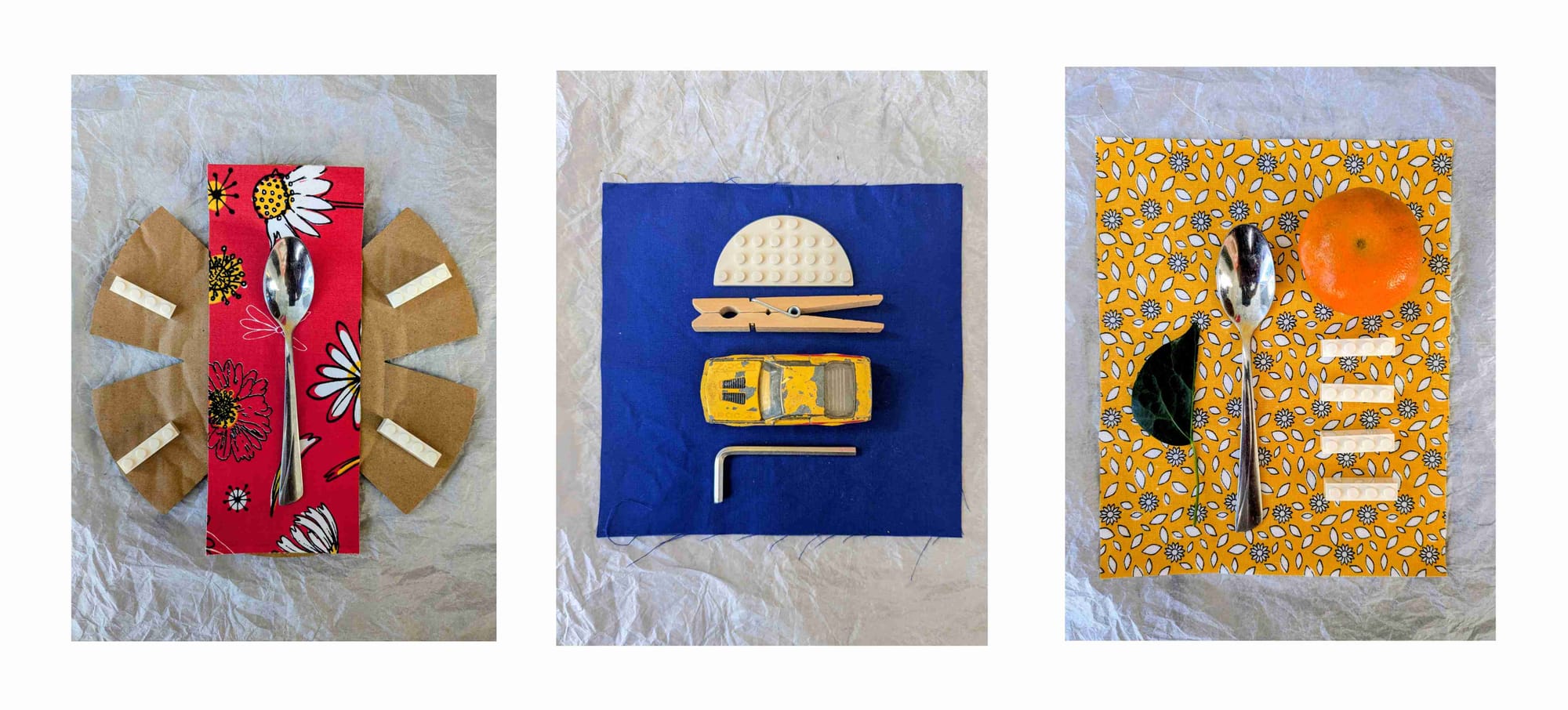
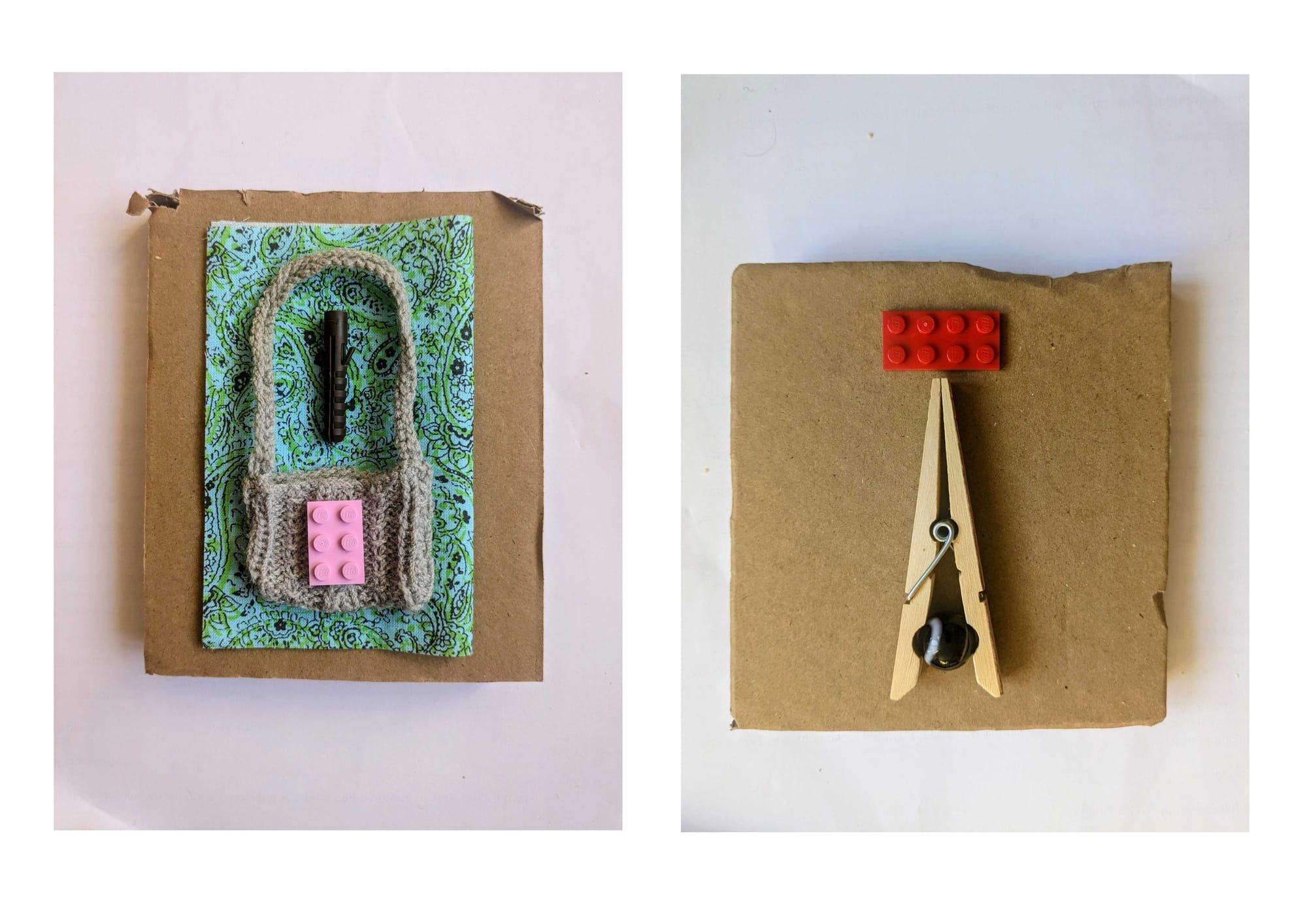
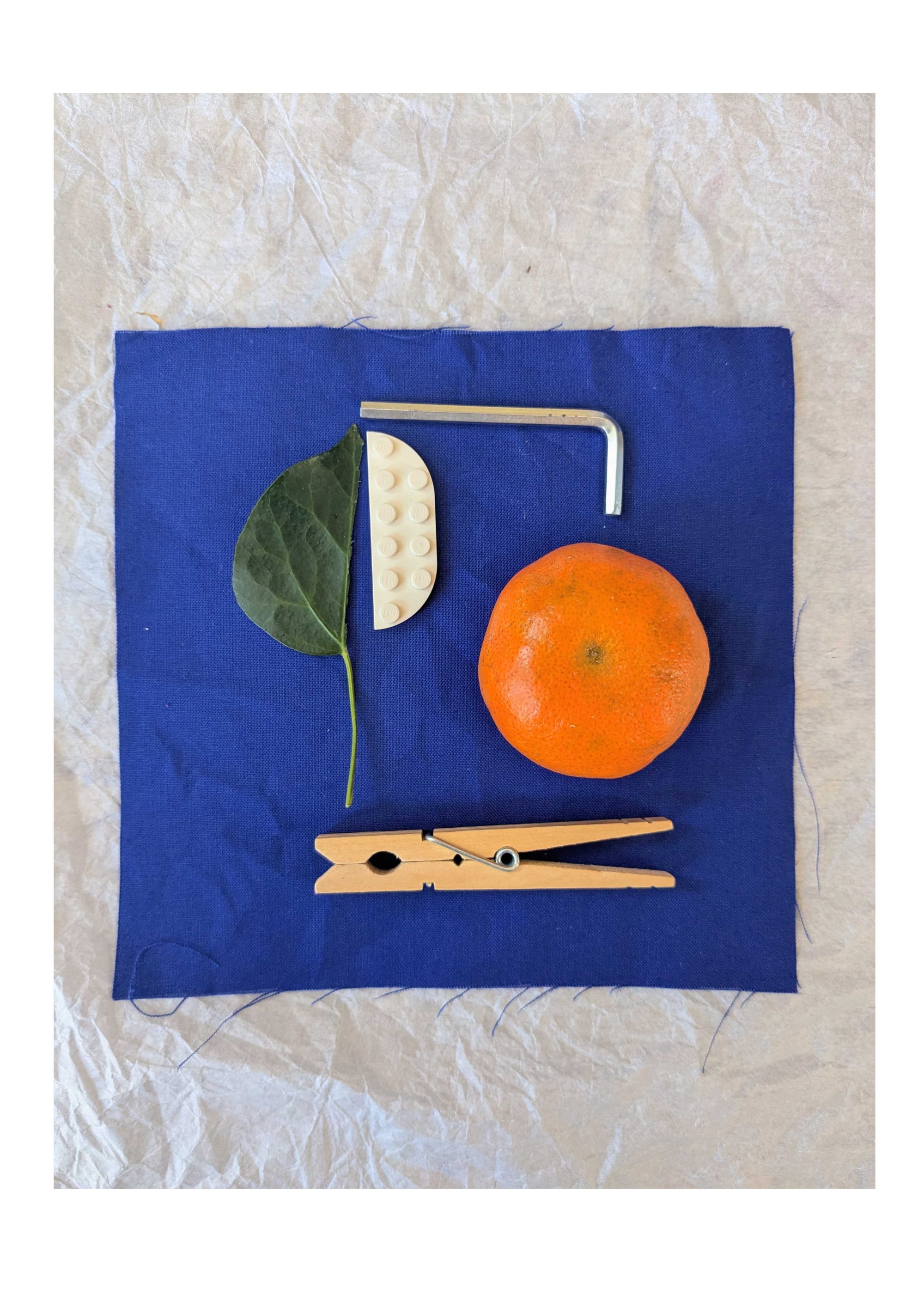
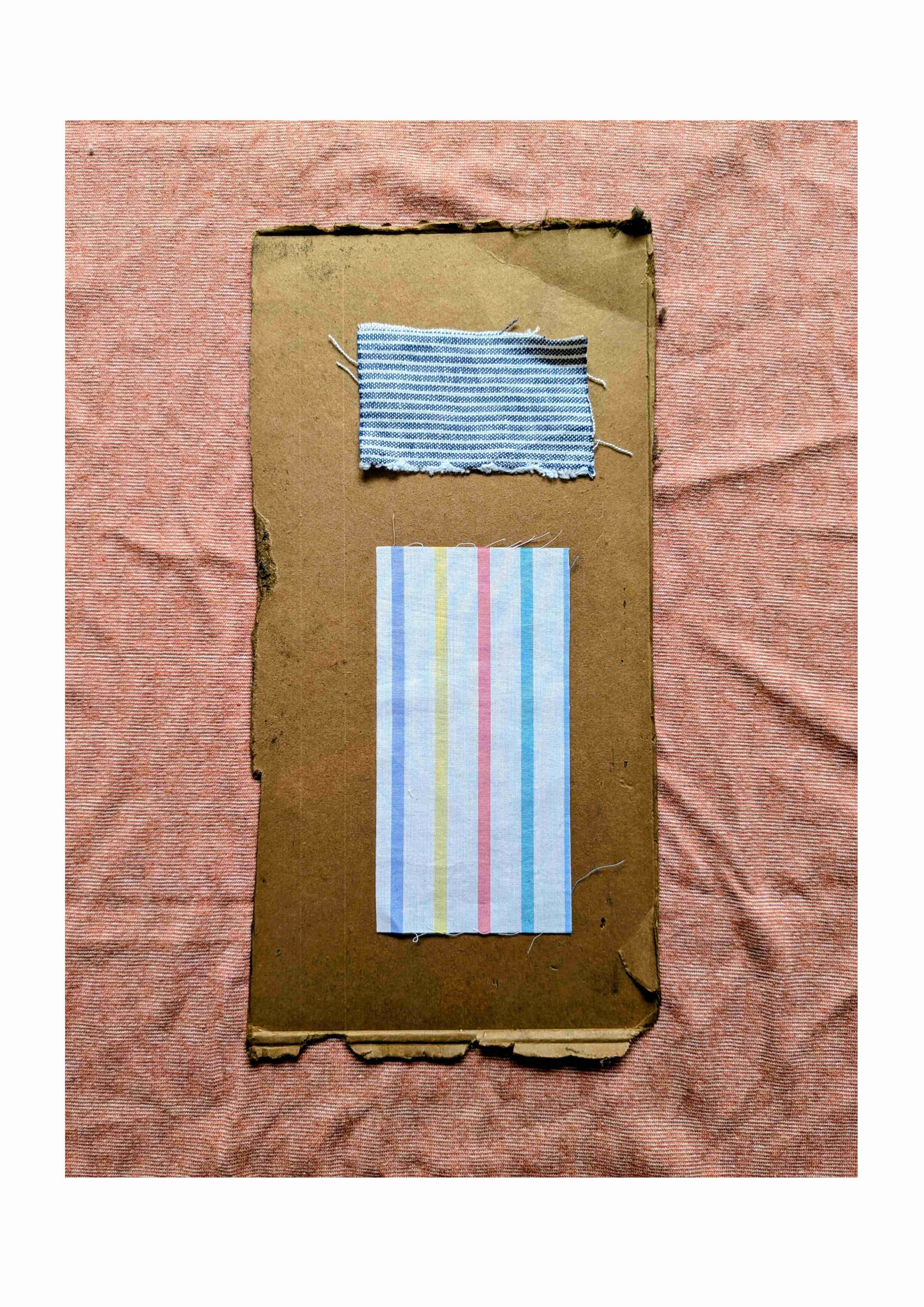
A set of assemblages created from found textiles, printed matter, and tactile objects relating to childhood and domesticity. The compositions engage with intuitive ritual and introduce elements of discomfort and indeterminacy. The choice and placement of materials prompt reflection on memory, dynamics of power and the negotiation of meaning within shared spaces.
Critical Framework
The work draws from autotheory’s method of theorising through embodied engagement, while new materialism is invoked to decenter the human and bring forward the agency of matter itself. Boundaries between art, theory, and lived experience become permeable, and the assemblage is seen as a site of intra-action. The approach foregrounds affect not as emotion but as the circulation of force, intensity, and sensation between materials and bodies. Together, these theoretical positions are used to frame material practice as both a form of critique and a mechanism for registering the ethical and political dimensions of everyday encounter.
Dis-carded
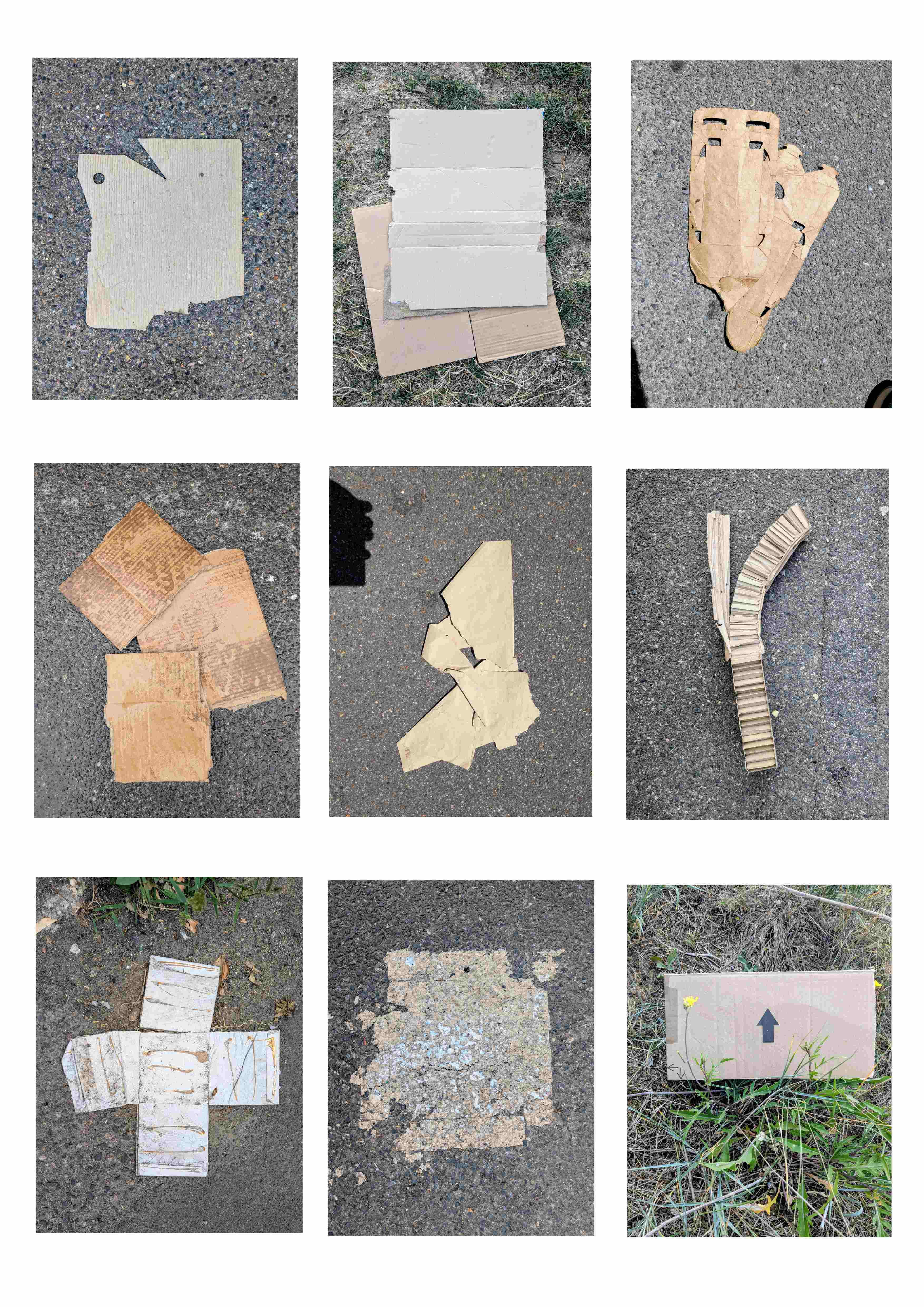
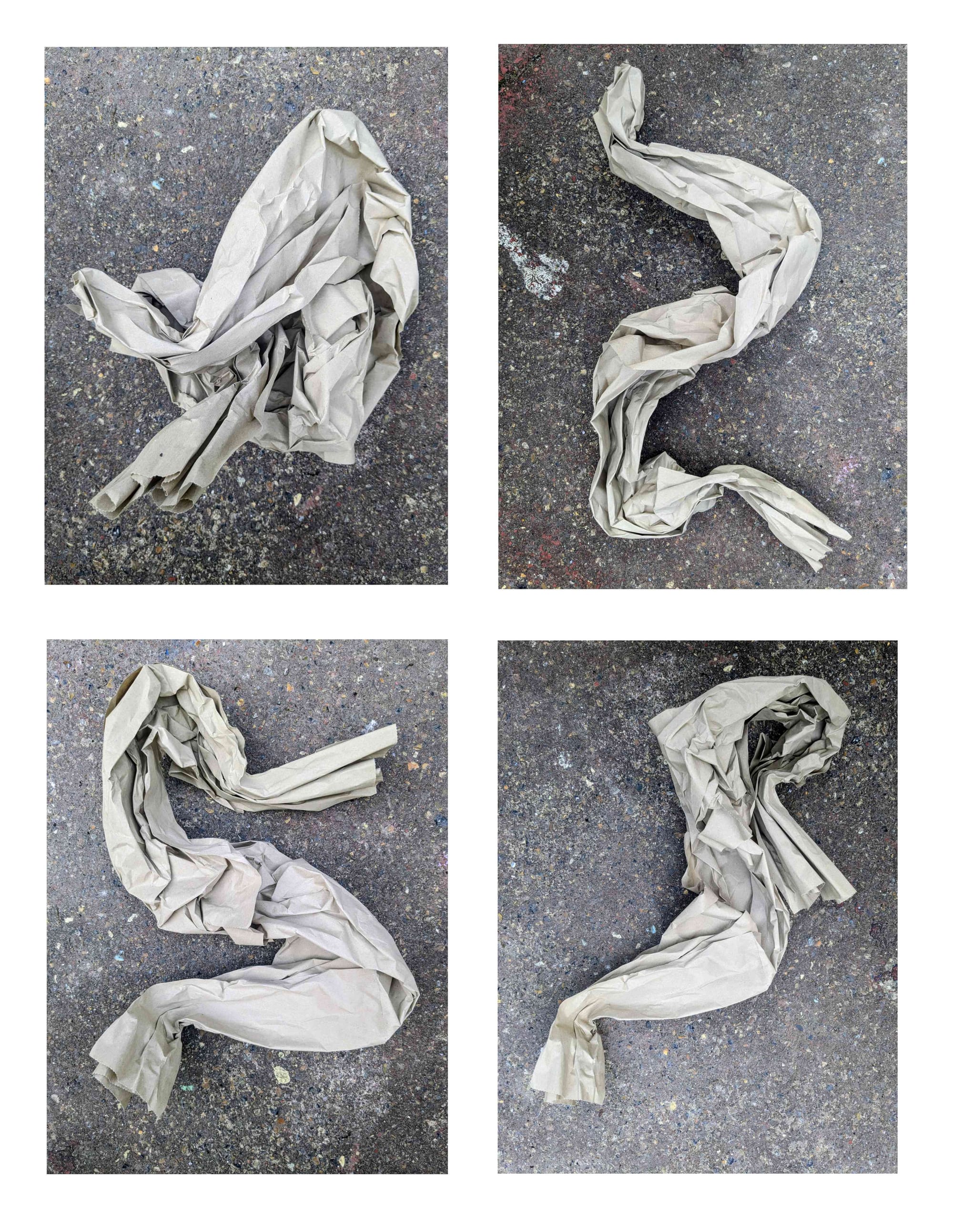
A series of photographs documenting pieces of discarded cardboard, found and captured in various states of decay and transformation. Each item, whether torn, weathered, or marked, is recorded as a distinct entity with a unique history. The process of collecting and photographing is both an autobiographical and analytic gesture, the material’s capacity to absorb and witness flows of use, neglect, and marginality. The series invites reconsideration of what is overlooked and the power dynamics involved in the act of discarding.
Burlap Wrap: Photographic Performance
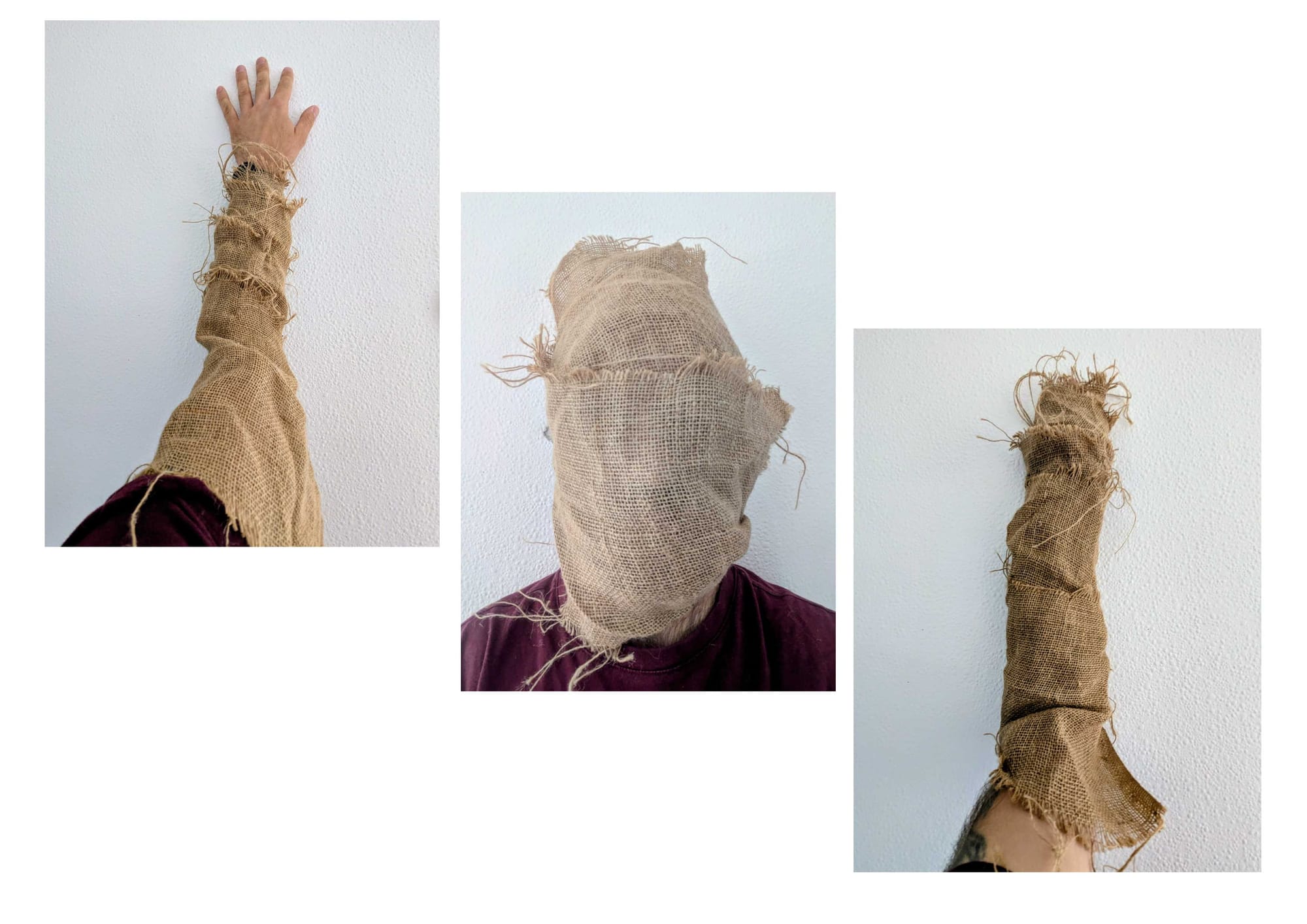
Images depict burlap material wrapped around limbs and heads. While burlap is commonly perceived as passive—soft, porous, and receptive—the act of wrapping asserts a form of agency, restricting movement, obscuring identity, and generating tension between concealment and exposure. The tactile qualities of burlap—its roughness and capacity to contain—produce sensations that include claustrophobia, discomfort, and restraint. The work explores questions of power, invisibility, and vulnerability.
Vessels of Transition
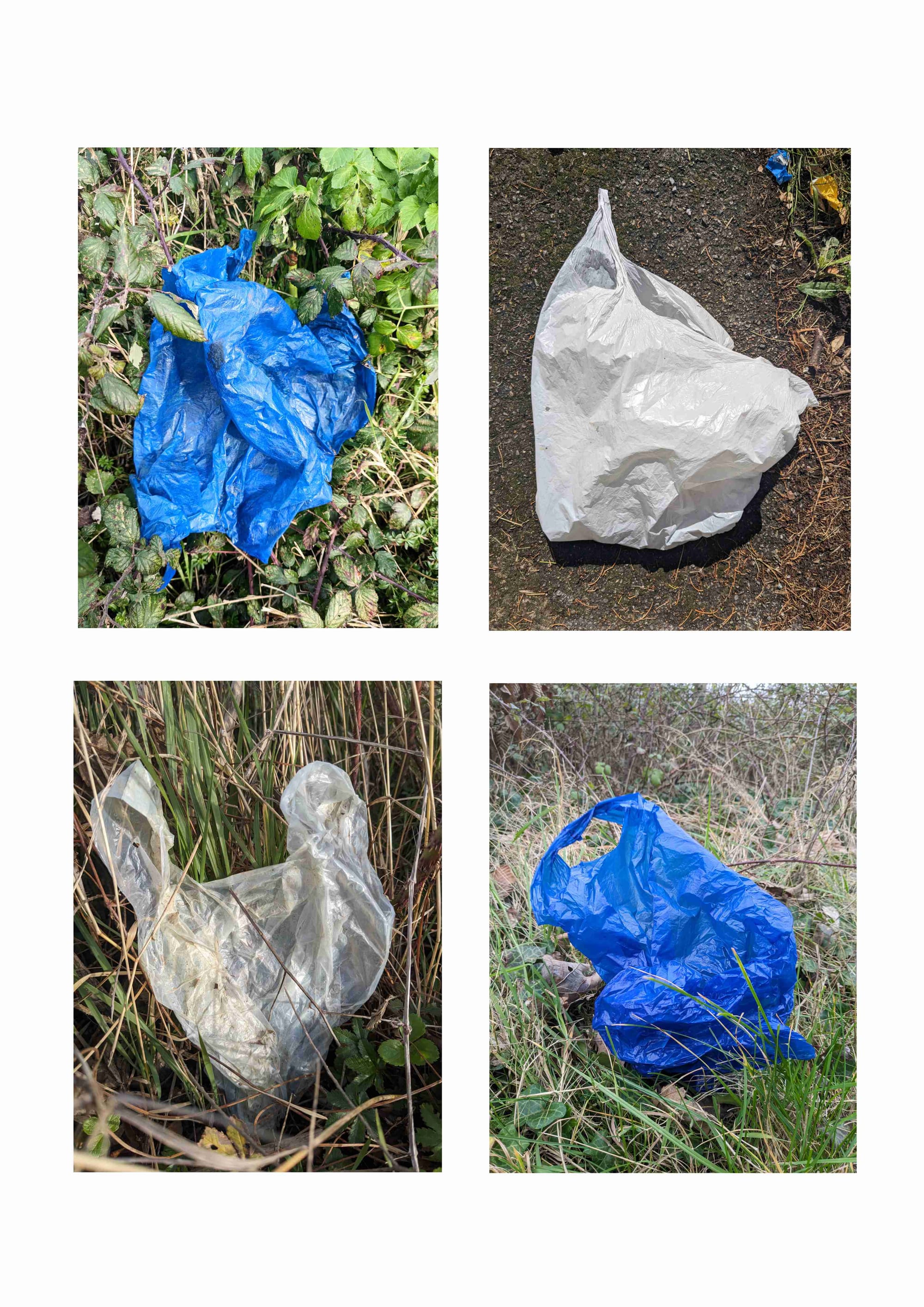
Photographs of abandoned plastic bags, shown in fragile and crumpled states outdoors. The works indicate the bags’ role not simply as refuse but as markers of transition, vulnerability, and precarity. The site-specificity foregrounds questions of movement and instability. The bags’ physical and visual qualities elicit affective responses aligned with loss, tension, and uncertainty. The series situates these objects both as autobiographical carriers and as agents in wider explorations of trauma, agency, and survival.
Sonic Mapping
How do we hear the power embedded in public space?
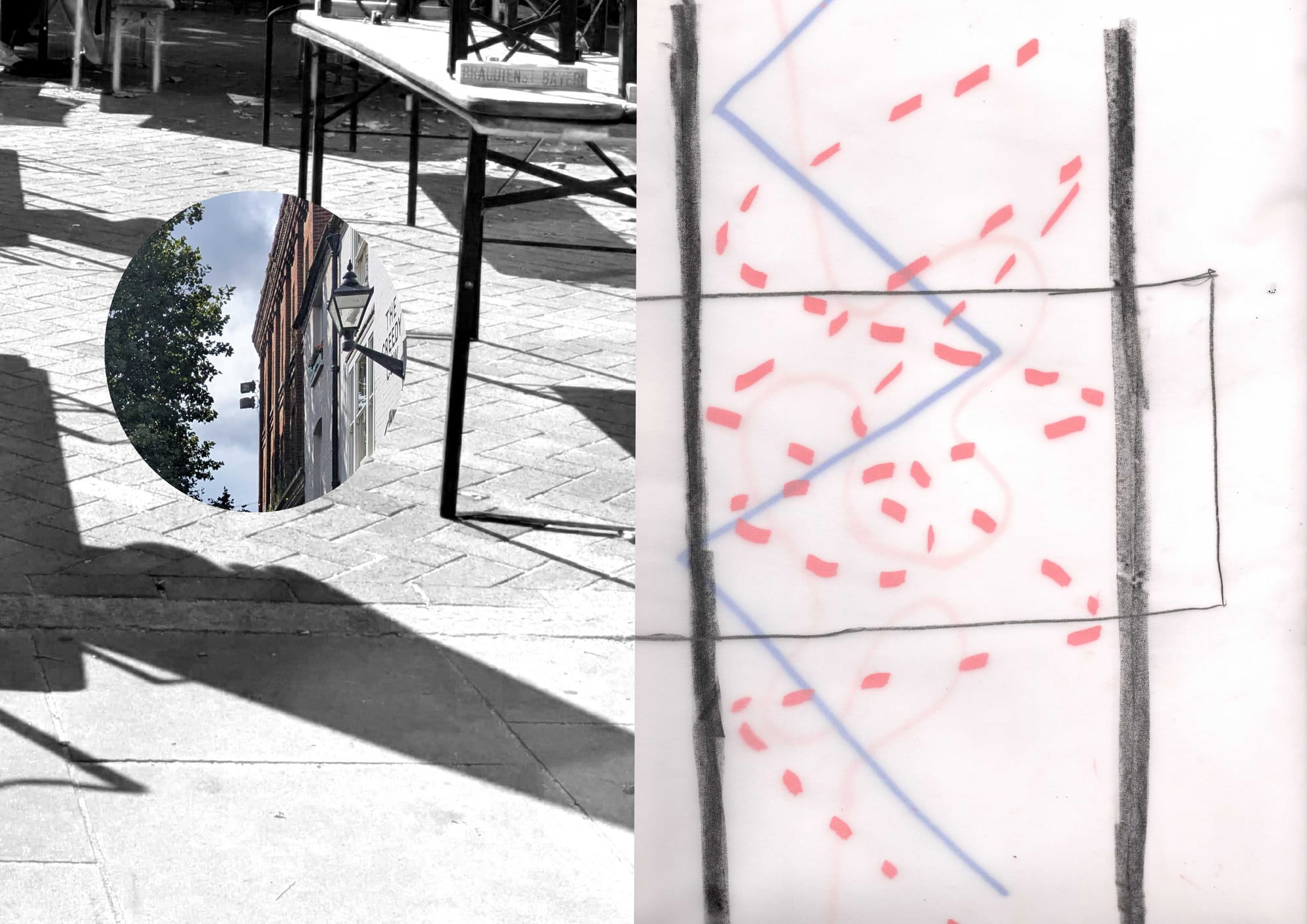
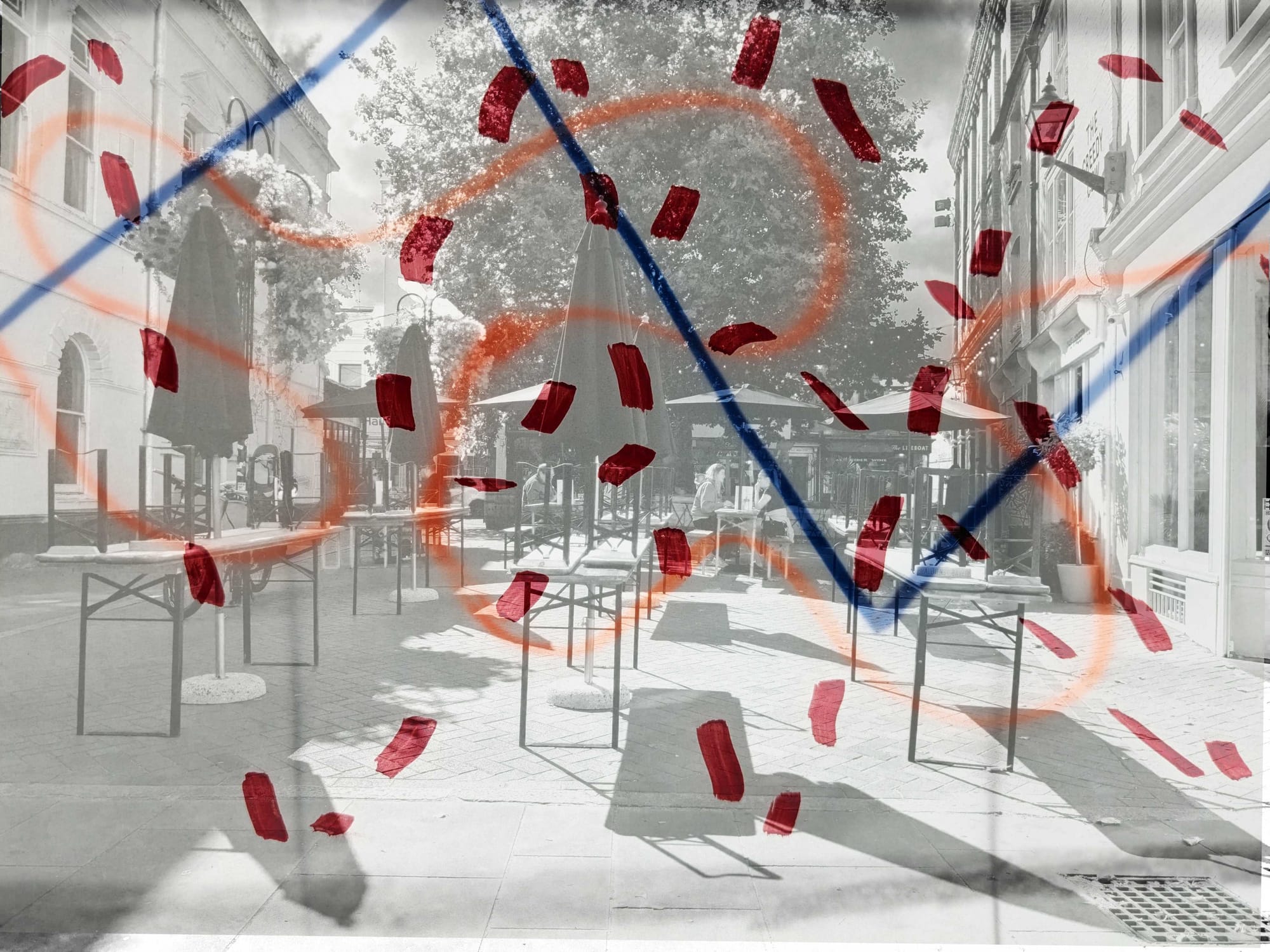
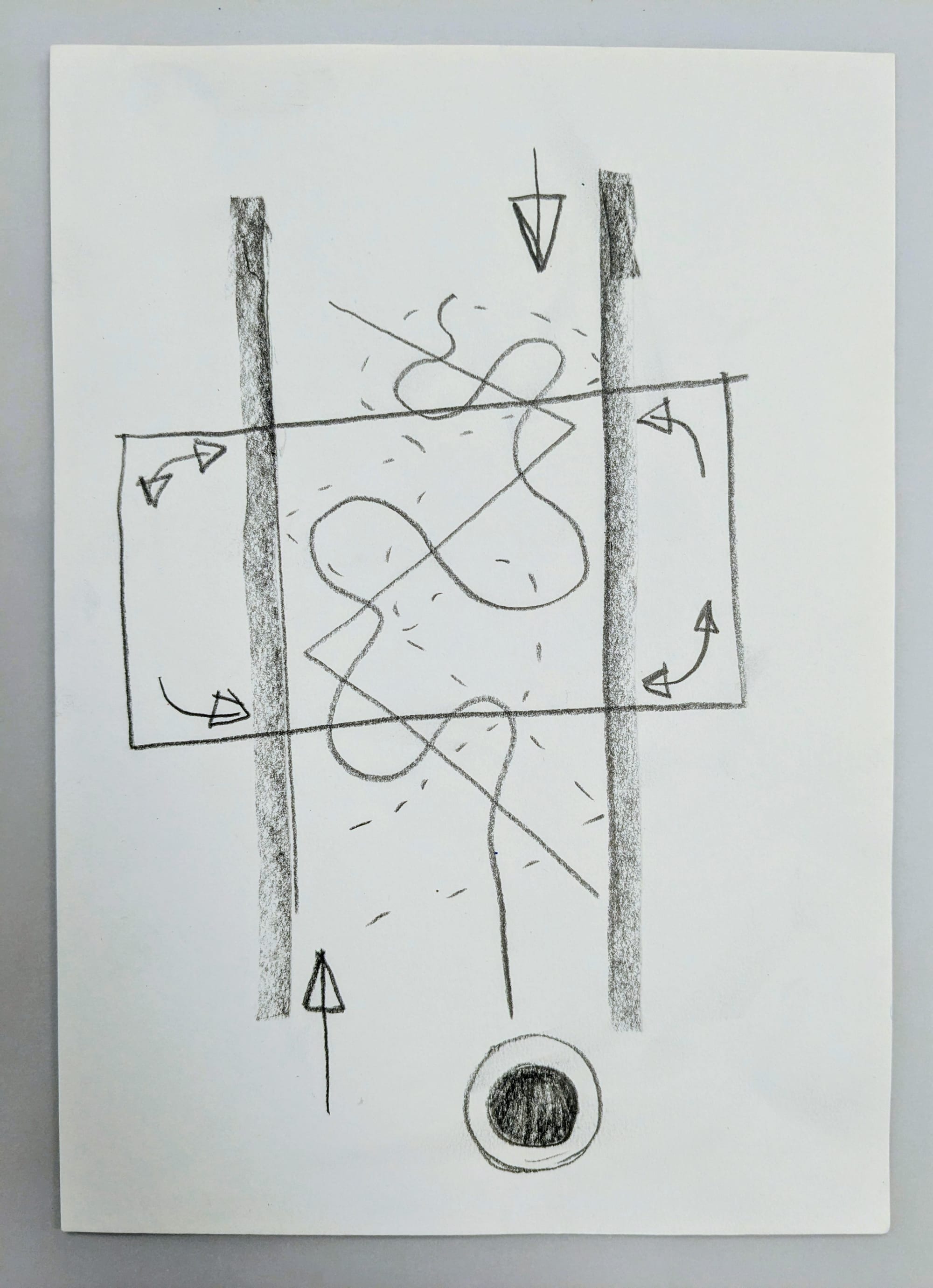
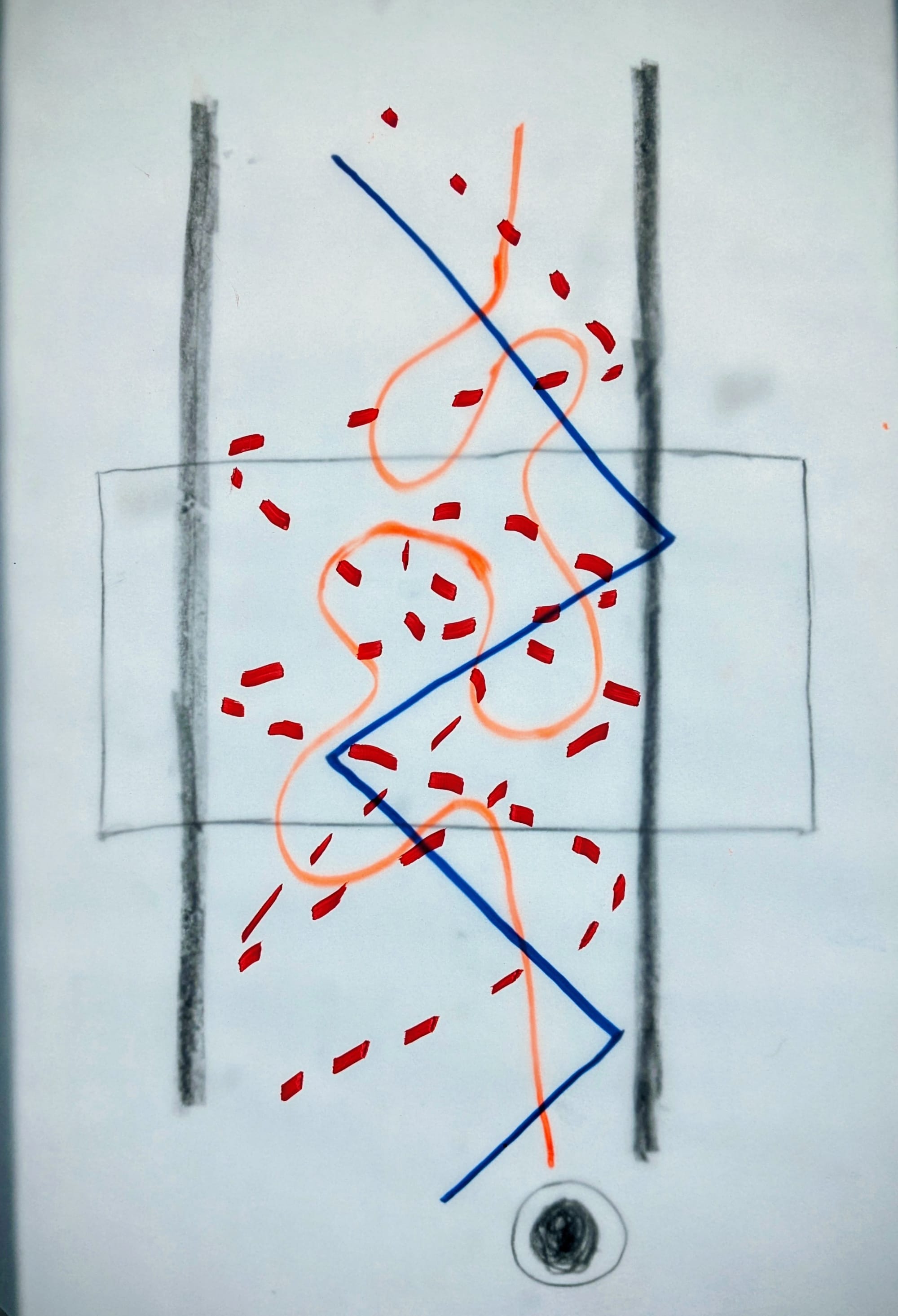
Sonic Mapping is an ongoing project exploring the politics of listening. Drawing on Brandon LaBelle’s three stages of listening, I use sound as a tool for mapping spaces—through recording, drawing, and photography. Each site becomes an unfolding score of its own, where sound reveals hidden relationships of movement, authority, and encounter.
By situating myself in different public contexts, I gather sonic materials—ambient noise, fleeting conversations, echoes, and silences—and translate them into experimental forms in the studio. These translations might take shape as diagrams, sketches, or spatial interventions, layering audio with visual traces.
This practice continues the critical trajectory of Material Conversations, extending its concern with how materiality and perception shape our understanding of place. Sonic Mapping asks: how does listening—deep, reflexive, and embodied—shift the way we experience power in the everyday?
Through this process, the work becomes both a map and an invitation: to listen differently, to re-tune attention, and to encounter the social fabric of space through its sonic dimensions.