Material Conversations
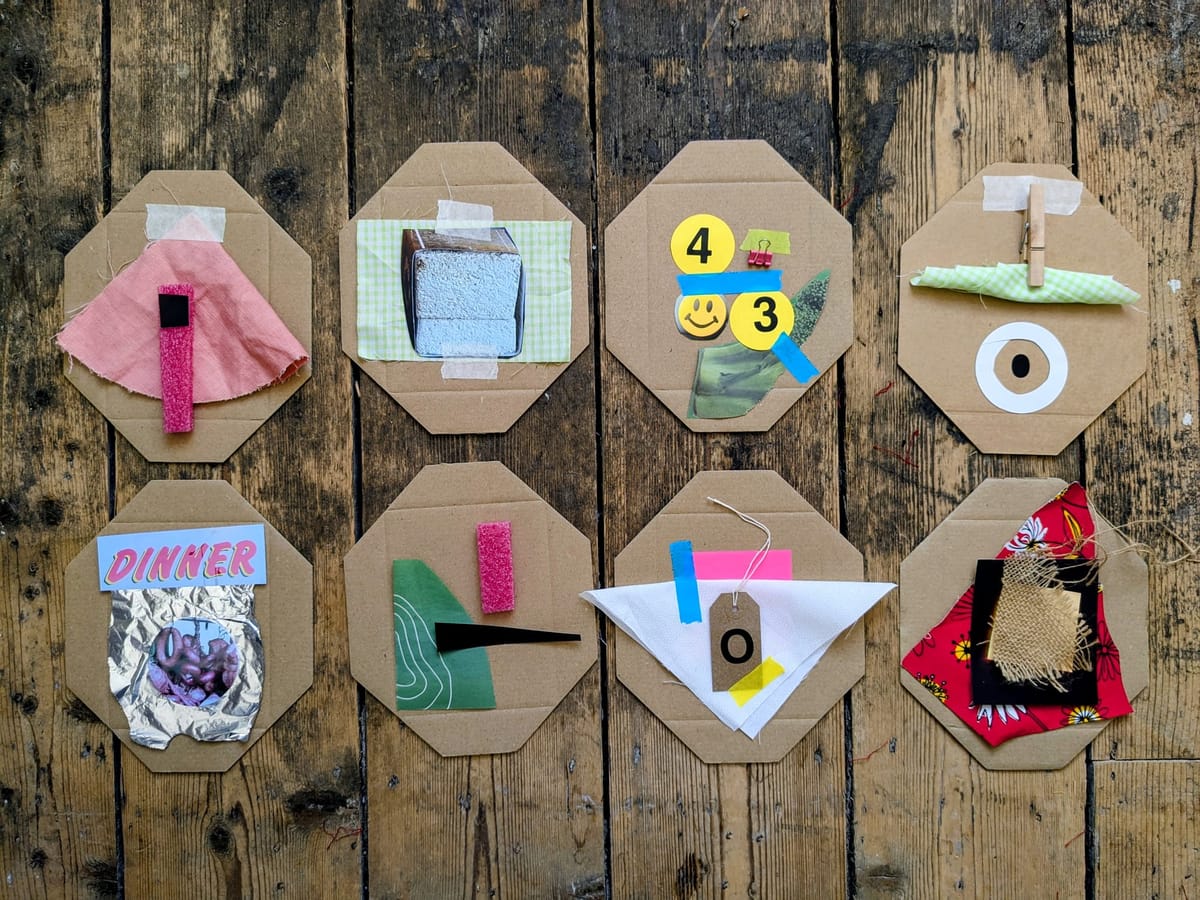
Today I want to share a series of experiments I’ve been playing with, work that explores how everyday materials become sites of exploration, care, memory, and reflection. Over recent months, I’ve been thinking about the agency of materials, positioning personal experience in relation to broader structures of care and power. Drawing threads from new materialism, autotheory, and affect theory, these experiments ask: what knowledge emerges when we play, arrange, and encounter the matter around us?
This process unfolds as a kind of embodied research. Whether with paint, sound, collage, found objects, or written words, I keep returning to material play as a source of insight, a way to surface knowledge that feels situated, relational, and sometimes uncomfortable. I find value in creating intuitive assemblages, welcoming knowledge to arise not just from thinking, but from making and feeling.
“Autotheory opens space for writers to think and feel at the same time.” — Maggie Nelson,
Assemblages
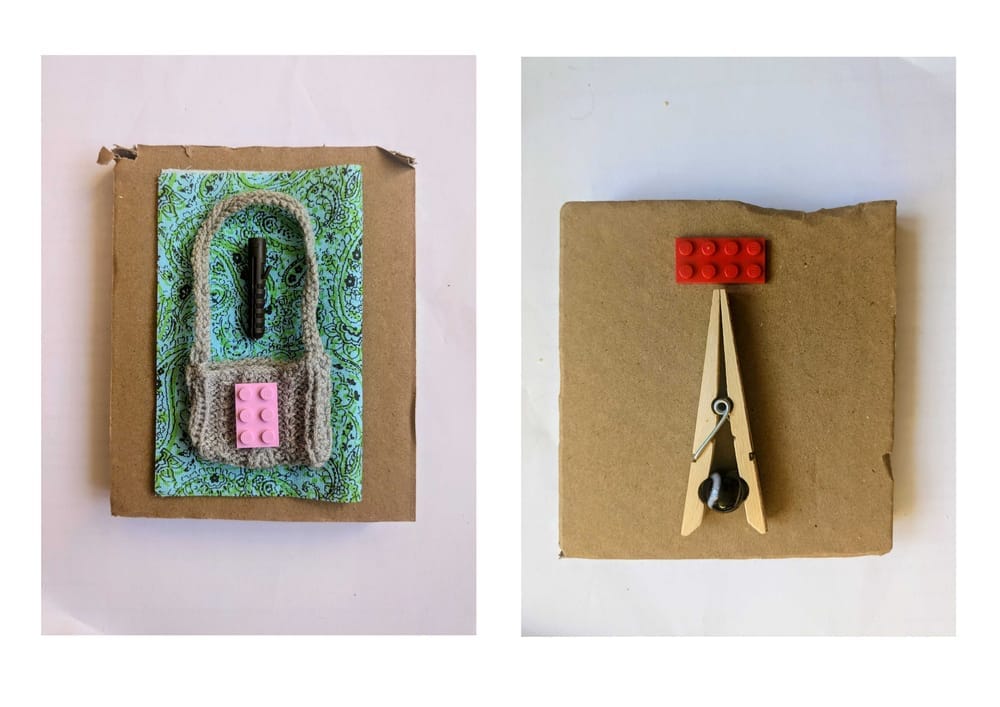
In one set, I’ve been arranging objects that connect to childhood and domesticity, pieces of fabric and toys linked to personal histories. These assemblages engage with ritual and invite discomfort, nudging me to reflect on memory, the dynamics of power, and the negotiation of meaning in shared spaces.
Fabric, in particular, has echoed themes of care and feminisms in my practice, stitched, interwoven, and tenderly held together. Arranging these playful, whimsical objects speaks simultaneously to my life as a father and as a child. Time, space, and memory criss-cross in these constellations, and the act of composing opens up questions about vulnerability, relationality, and the ethical dimensions of memory work.

Dis-carded
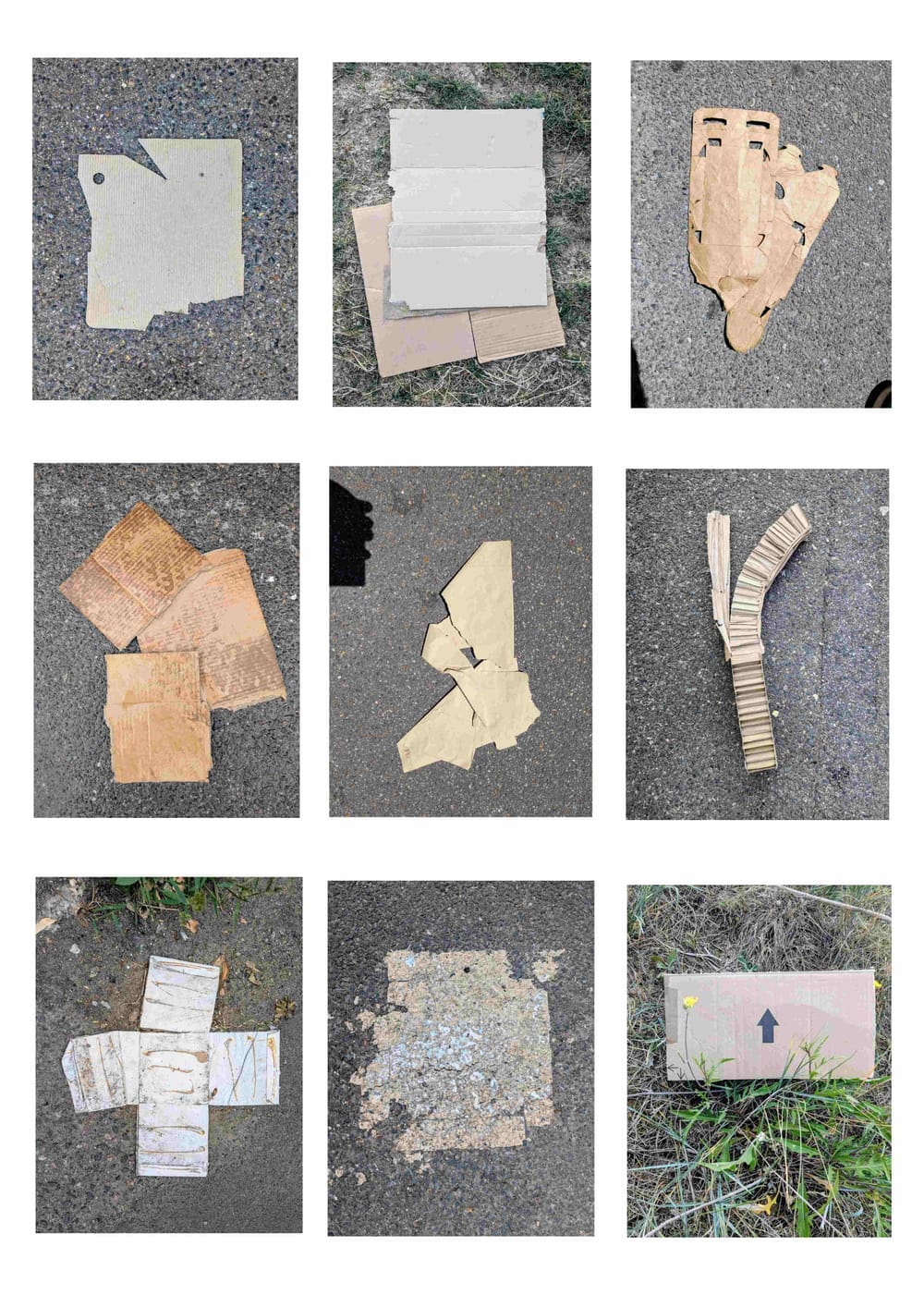
Another strand in this project has been collecting and photographing discarded cardboard, items found in varying states of decay and transformation across Margate. These images serve both as autobiographical records and analytical gestures, highlighting the overlooked and the marginal, and inviting reflection on the flows of use, neglect, and power. The process of picture-taking bridges personal story with broader questions of what we choose to witness or discard, and how materials absorb and remember their encounters.
Vessels of Transition
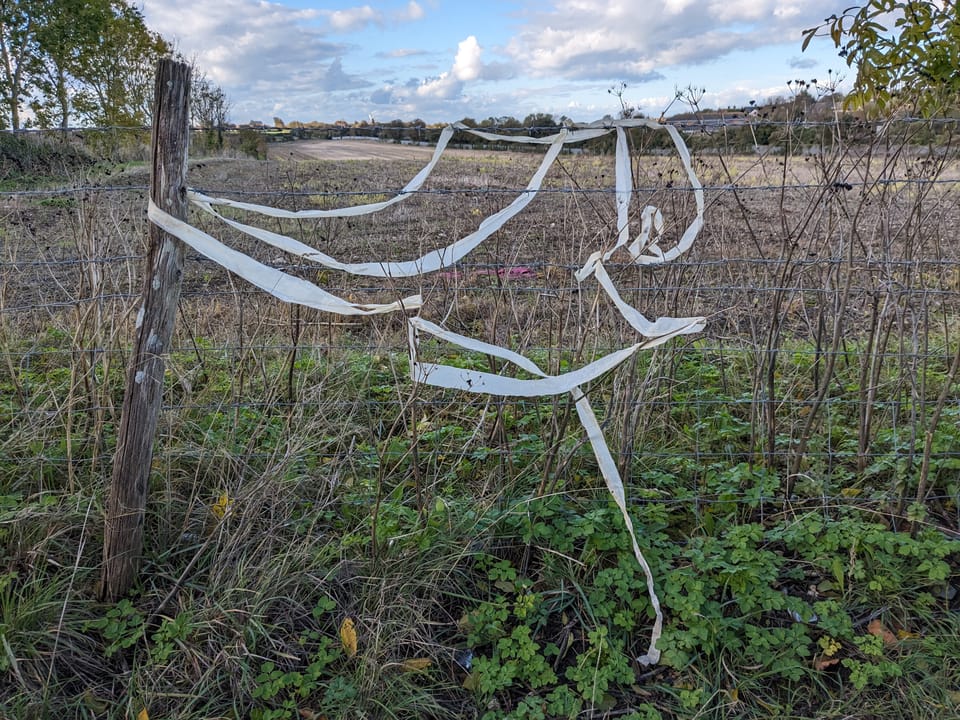
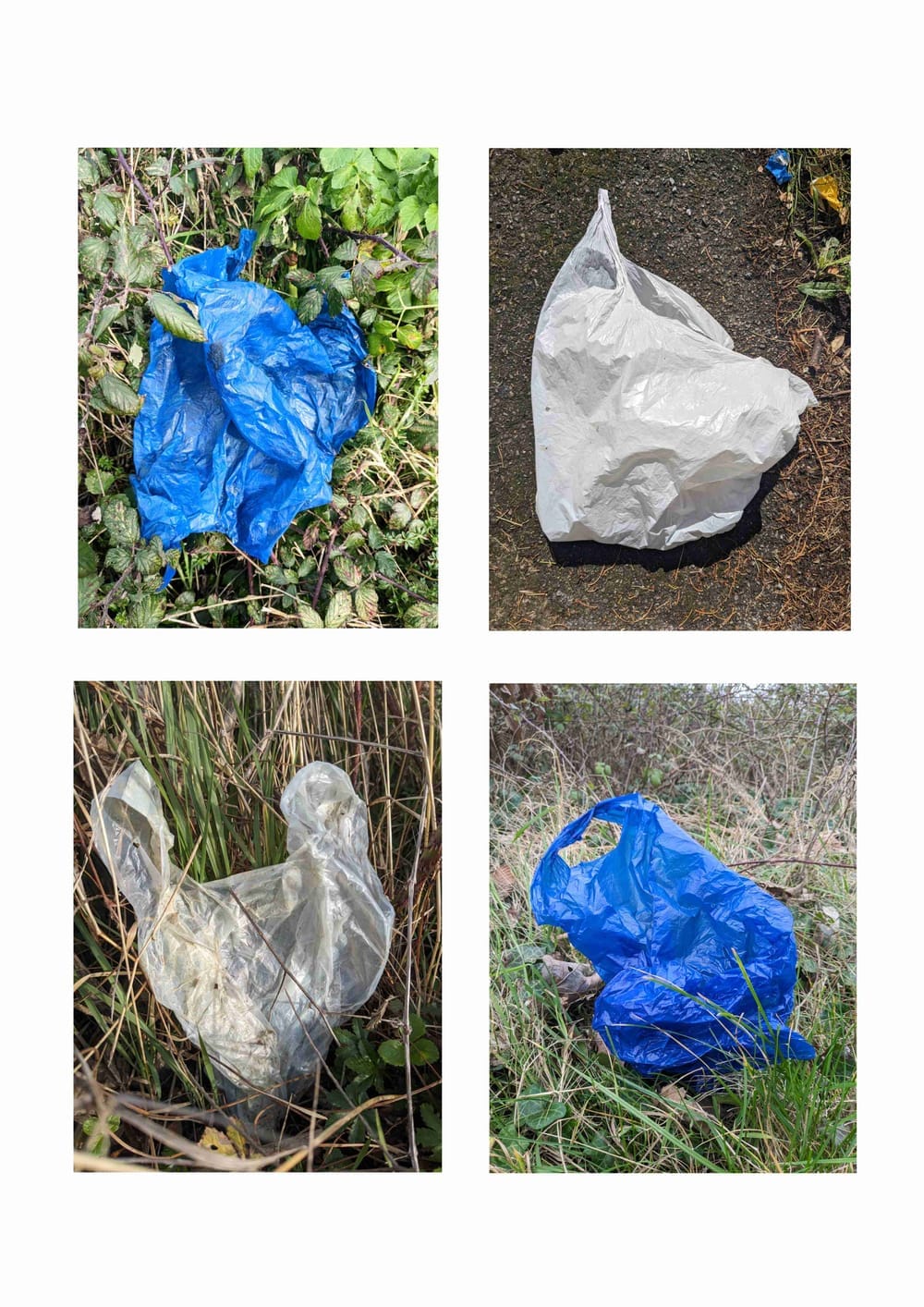
Alongside this, I’ve spent years (on and off) photographing abandoned plastic bags, fragile, crumpled shapes in the outdoors. At first I wasn’t sure what drew me to these objects. But as I reflected, I realised their capacity to carry and hold spoke to ideas of transition, vulnerability, and survival. Each bag, as both index and agent, marks movement across landscapes of trauma and precarity. They become poignant signals of loss and uncertainty, and also invitations to reconsider the ethical and political lives of what might otherwise be overlooked.
Weaving Experience & Theory
“Theory itself is often assumed to be abstract . . . to detach from lived experience, to float above bodies, on clouds of ideas.” — Sarah Ahmed, cited by Lauren Fournier in Autotheory as Feminist Practice
Theoretical frameworks anchor and deepen these experiments. Autotheory’s method, thinking through embodied engagement, helps bridge art, lived experience, and critique. New materialism foregrounds the agency and vibrancy of matter, decentring the human and asking us to listen differently to objects, spaces, and materials. Affect theory invites me to work with sensations and intensities circulating between bodies and things, reframing feeling as not just emotion but as force and encounter.
“Affect is what sticks, or what sustains or preserves the connection between ideas, values, and objects.” — Melissa Gregg & Gregory J. Seigworth, The Affect Theory Reader.
Ultimately, this work is about remembering and negotiating meaning through process rather than product. In arranging, observing, and documenting material encounters, I seek to create spaces for intuition, care, and ethical attention. And through the material, I find new ways to connect past and present, childhood and parenthood, vulnerability and resilience, woven together like the very fabrics and objects that animate these constellations.
“Your silence will not protect you.” — Audre Lorde, The Cancer Journals